


India
oi-Swastika Sruti

The New Delhi Declaration, which was adopted at the 18th BRICS summit, has covered a number of significant global issues such as the Pahalgam terror attack, the conflict in West Asia, as well as tariff barriers and institutional reform.

The New Delhi Declaration adopted at the 18th BRICS summit addressed global issues including terrorism and the West Asia conflict, advocating diplomacy while opposing unilateral tariffs and calling for reforms in institutions like the UN Security Council and WTO.
Although the document emphasized the need for diplomacy and dialogue in resolving global conflicts, there have been concerns expressed about the use of unilateral tariffs and sanctions, although not specifically mentioning US President Donald Trump.
BRICS Calls for Diplomacy on Global Conflicts
The document highlighted the need to resolve international disputes via dialogues, consultations and diplomacy. Regarding the West Asia dispute, the BRICS leaders showed deep concerns regarding the escalating tensions in the region and appealed for utmost restraint. They also supported the immediate ceasefire in Gaza and unhindered humanitarian aid in that region.
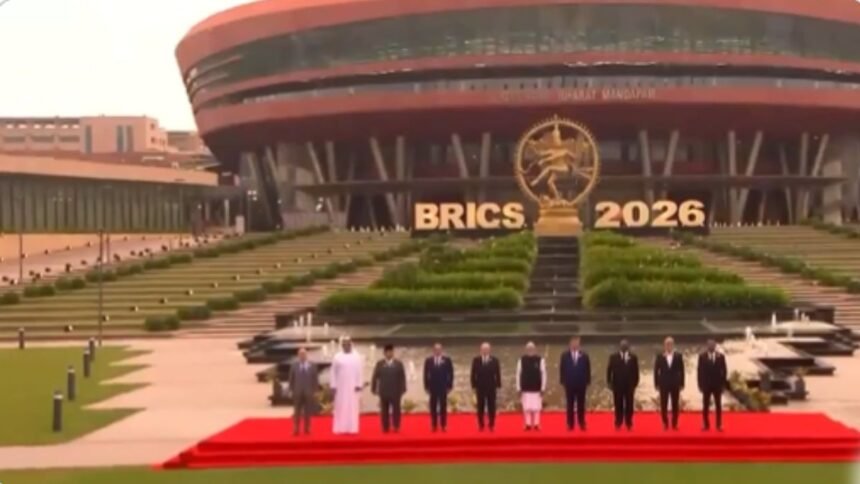
Prime Minister @narendramodi, BRICS Leaders and other dignitaries pose for a Family Photo at Bharat Mandapam on Day 2 of the BRICS Summit.@MEAIndia @BricsIndia2026 #BRICS2026 #BRICSIndia2026 #IndiaBRICSChairship pic.twitter.com/tNX3hTpvX8
— All India Radio News (@airnewsalerts) September 13, 2026
The declaration did not contain any mention of the ongoing Russia-Ukraine war situation even though Russia is one of the founding members of BRICS.
The inclusion of the terror attack in Pahalgam in the declaration gave India an opportunity to stress on the dangers of terrorism.
Indirect Message on US Tariffs
One of the most significant aspects of the declaration was its position on global trade.
Although US President Donald Trump was not named, the document raised concerns over the increasing use of unilateral tariffs, non-tariff measures and economic sanctions.
BRICS countries said such measures can distort international trade and are inconsistent with the principles of the World Trade Organisation.
The declaration also condemned unilateral coercive measures, unilateral economic sanctions and secondary sanctions.
The language comes amid a period of heightened trade tensions, with Washington using tariffs as a major tool in its economic policy.
Trade and Tariffs Become Major Concern
The repeated focus on trade and tariffs reflects the changing economic environment faced by BRICS countries.
India, China, Brazil, South Africa and other members have large and diverse economies that depend on international markets and supply chains. Rising tariffs and protectionist measures can increase costs, disrupt exports and make global supply chains less predictable.
For many developing countries, this has made the search for alternative markets and stronger supply chains a more immediate priority.
The BRICS position also indicates that member countries want a greater role in discussions on how global trade rules are shaped.
India and China Find Common Economic Interests
Despite their differences, India and China share several economic interests in the current global environment. Both countries have major export sectors and depend on stable international markets. They also have an interest in securing energy supplies and protecting supply chains, particularly as instability in West Asia creates additional risks.
The broader push for stronger BRICS cooperation could therefore create areas of economic engagement even as individual members maintain different strategic positions on global issues.
Modi Calls for a Stronger Global South Voice
Prime Minister Narendra Modi used the summit to make a wider argument about the role of developing countries in global decision-making.
He said BRICS had “come of age” and should turn its collective influence into concrete results on the international stage.
Modi argued that countries of the Global South are often directly affected by global crises but have a much smaller role in making the decisions that shape those crises.
He called for this imbalance to change and said global institutions should provide greater representation to emerging economies.
India Pushes for UN Security Council Reform
India again raised the issue of reforming the United Nations Security Council.
Modi called for permanent representation for India and other emerging powers, arguing that the institutions responsible for global governance should better reflect today’s world.
India has consistently supported reform of the UN Security Council, including expansion of both permanent and non-permanent membership.
The BRICS platform gives New Delhi another forum to push for changes to the existing international order.
The summit holds a broader message about giving developing economies a stronger voice in global decision making. Calls for reforms to institutions such as the WTO, International Monetary Fund and UN Security Council reflect the grouping’s demand for a more representative international system.