



India
oi-Madhuri Adnal

Actor Imran Khan will have to wait until Tuesday to know whether he can get relief from the notice asking him to leave India. The Bombay High Court is scheduled to hear his petition on October 27, after the matter was postponed because both sides sought more time.
The Foreigners Regional Registration Office (FRRO) has directed the actor to leave the country by October 28. The notice was issued after Khan attended a protest against Chief Election Commissioner Gyanesh Kumar in Mumbai on October 10.
Actor Imran Khan, facing a Foreigners Regional Registration Office notice to leave India by October 28 after attending a protest, has petitioned the Bombay High Court to quash the order, with the court set to hear his plea on October 27.

With the deadline just a day after the scheduled hearing, the court’s decision could be crucial for the actor.
Khan approached the Bombay High Court last week, challenging the notice and asking the court to set it aside. He has argued that the order is unconstitutional and has sought an interim stay to prevent the authorities from acting on it while his petition is being heard.
The 43 year old actor is a US citizen and holds an Overseas Citizen of India (OCI) card. In his petition, he has questioned the legal basis for directing him to leave the country, arguing that the notice does not clearly state which specific provision of the law he allegedly violated.
He has also raised concerns about the procedure followed by the authorities. According to his plea, he was not given a prior hearing, served a show cause notice or allowed to explain his position before the order was issued.
Apart from challenging the notice, Khan has asked the court to prevent the authorities from deporting him, issuing a Look Out Circular (LOC), blacklisting him or taking action against his OCI status.
His petition argues that the authorities have not properly considered his OCI status while issuing the notice. OCI status allows eligible foreign nationals of Indian origin to live in India under certain conditions, although it does not confer Indian citizenship.
Khan has denied violating the conditions attached to his OCI status. He has argued that the restrictions on public gatherings at the time were imposed through a local police order and not under the Immigration and Foreigners Act, 2025.
He has also questioned the claim that the protest venue fell under the category of protected or prohibited places notified by the Central Government under the Act.
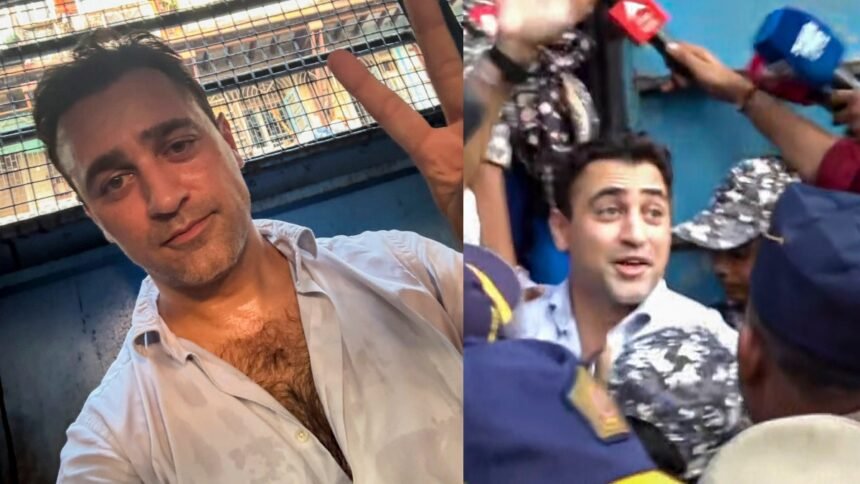
Khan has disputed the allegations linked to his participation in the October 10 demonstration near August Kranti Maidan in Mumbai.
In his petition, he has claimed that he did not try to cross police barricades. He has said he was returning to his car after being asked to leave when he was apprehended. He was released later that evening.
The actor has argued that attending a protest does not automatically amount to a violation of the rules governing foreign nationals or OCI cardholders.
He has also questioned the decision to issue the notice based on an FIR that is still under investigation. His plea challenges the use of the pending case as grounds to direct him to leave India.
The matter began with a complaint by BJP leader Kirit Somaiya, who alleged that Khan had violated the law by attending the October 10 protest near August Kranti Maidan.
Mumbai Police forwarded the complaint to the FRRO, which subsequently issued the notice directing the actor to leave India by October 28.
Khan has now asked the Bombay High Court to intervene before the deadline expires. The court is scheduled to hear his petition on October 27, when his request for relief against the notice will come up for consideration.