


International
oi-Gaurav Sharma

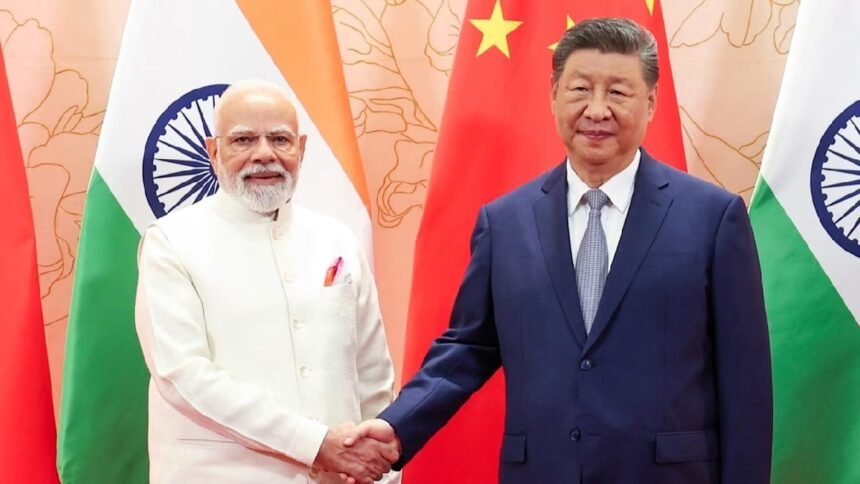
India and China have signalled a desire to mend fences, with Prime Minister Narendra Modi and Chinese President Xi Jinping meeting on the margins of the BRICS Summit in New Delhi.
The meeting follows years of military and diplomatic standoffs between the Asian neighbours, which intensified after a border clash in eastern Ladakh in 2020. Yet the recent talks suggest both sides want to avoid a resumption of competitive dynamics that could lead to a new confrontation.
During the BRICS Summit in New Delhi, India’s PM Narendra Modi met China’s President Xi Jinping, signaling a shared desire to restore predictability and avoid confrontation following past standoffs, emphasizing continued dialogue and border stability.

China has welcomed Prime Minister Narendra Modi’s statement that India’s foreign policy is “independent” and not dictated by any third party and that New Delhi’s engagement with Beijing is free from such influences. Spokesperson for the Chinese foreign ministry, Guo Jiakun stated that his country appreciates the comments of Modi and underlined the perception that China and India should be “partners” rather than “competitors”.
For Beijing, this is an important message as it seeks to temper India’s deepening strategic, economic and security ties with the United States, Japan, Australia and European countries. New Delhi has always denied that its partnerships are aimed against China, and have merely been dictated by its own national interests and strategic autonomy.
Border disputes are the main obstacle to the restoration of trust, as India has made it clear that stability and tranquillity in the region are a prerequisite to restoring broader relations. During the meeting, Modi once again stressed the need for both sides to show respect for the existing framework of bilateral agreements and understandings.
The two sides had agreed to a disengagement deal in October 2024, ending a military standoff that had lasted more than four years. Yet, there are still outstanding territorial disputes and recent reports of new face-offs in some of the contested areas.
Both leaders have expressed willingness to continue the dialogue and to pursue a peaceful resolution of the differences. India has also reiterated its principles of mutual respect, mutual sensitivity and mutual interest.
The economic relationship is another factor that could drive both countries to seek closer ties. India and China are important trading partners, although New Delhi has sought to reduce its reliance on imports from other countries and promote its own manufacturers.
Xi’s India visit, which is his first in seven years, has therefore generated great diplomatic buzz. It does not mean that all problems have been resolved, but rather that both sides seek to restore predictability in bilateral ties.
The next step will be to translate the words of the two leaders into action. For India, stability along the border will be the primary test of whether the talks have truly improved relations with China.