



India
oi-Madhuri Adnal

Indian households faced higher prices in September as retail inflation rose to 5.54%, compared with 4.83% in August, provisional data by the National Statistics Office (NSO) showed on Monday. The increase came largely from food items, with onions, garlic and lemons becoming more expensive during the month.
Data released by the National Statistics Office (NSO), under the Ministry of Statistics and Programme Implementation (MoSPI), showed that inflation was higher in rural areas, at 6.08%, than in urban areas, where it stood at 4.88%.
In September, Indian retail inflation rose to 5.54% driven by a sharp increase in food prices, particularly onions (up 108.09%), with rural inflation at 6.08% exceeding urban rates, according to NSO data.

September also recorded the highest inflation under the Consumer Price Index (CPI) series introduced in January.
Food inflation climbed to 7.74% in September from 5.97% a month earlier. The rise in prices of everyday kitchen essentials was a major reason behind the increase, putting additional pressure on household budgets.
Onion Prices More Than Double
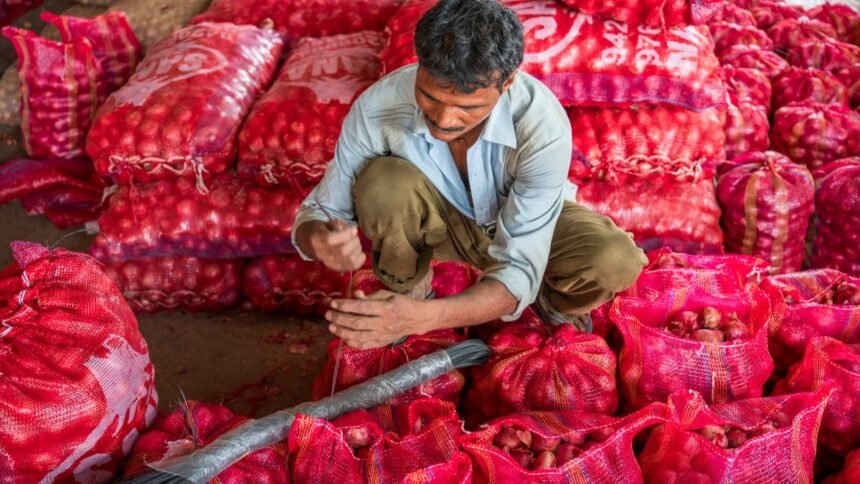
Onions saw the sharpest price rise among the major food items listed in the data. Onion inflation jumped to 108.09% in September, compared with 48.78% in August.
Garlic prices also continued to rise, with inflation reaching 54.62%, up from 43.60% in the previous month. Lemon inflation increased to 36.41% from 15.15%.
The steep increases in these commonly used ingredients highlight how food price fluctuations can affect household spending, even when the overall inflation figure appears relatively moderate.
Prices Rise Across Other Sectors Too
Food was not the only category where consumers faced higher prices. Inflation in personal care, social protection and other goods and services stood at 13.75% in September.
Accommodation services in restaurants and hotels recorded inflation of 9.36%. Transport inflation was 5.01%, while the cost of running private vehicles rose by 7.46%.
Other categories saw smaller increases. Inflation in education services stood at 3.94%, while housing and utilities recorded 2.74%. Health inflation was lower at 1.40%.
September’s retail inflation figure was above the Reserve Bank of India’s (RBI) target of 4%. However, it remained within the central bank’s acceptable range of 2% to 6%.
The RBI uses the repo rate, the rate at which it lends to commercial banks, as one of its main tools to manage inflation. Changes to the rate can affect borrowing costs for banks, businesses and consumers.



