


In Context
oi-Madhuri Adnal

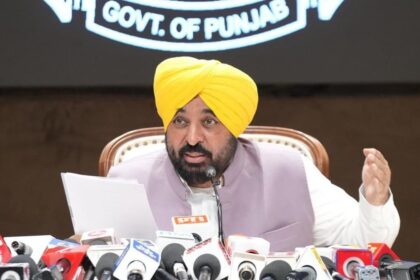
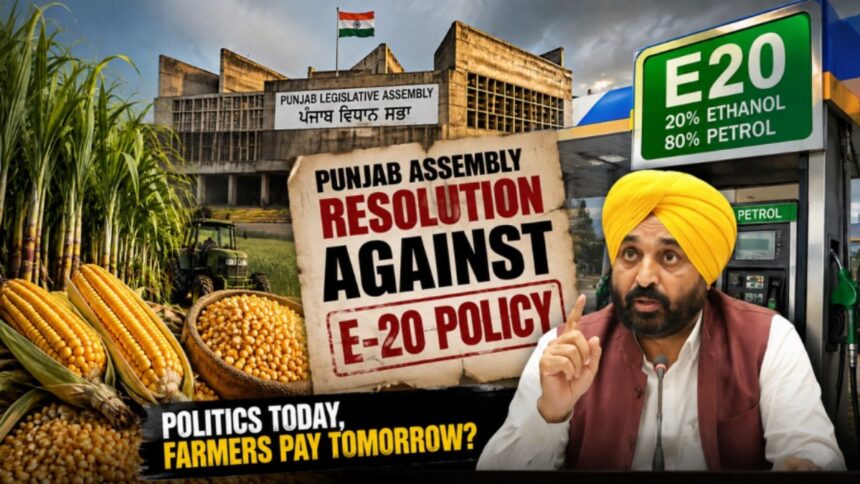
The Punjab Legislative Assembly’s recent passage of a resolution against the Centre’s mandatory E-20 (20% ethanol-blended petrol) rollout has exposed a striking disconnect between political posture and ground-level rural economics. Moved during the Monsoon Session and spearheaded by Chief Minister Bhagwant Mann, the resolution took jabs at the Central policy, raising alarms over mileage, engine wear, and vehicle compatibility. Yet behind the political grandstanding lies a policy manoeuvre that risks destabilizing the very farmers and rural markets Punjab claims to protect.
When CM Bhagwant Mann was making fun of the E-20 blending and the finance minister of the border state Harpal Singh Cheema was accusing the BJP of advancing mandatory E20 fuel blending from 2030 to 2026, raising serious concern over safeguarding the interest of the consumers, vehicle-owners and the state, however, the minister conveniently forgot the interest of farmers it seems, particularly those whose produces or byproducts power ethanol industry. Let’s examine the Punjab’s stand on E-20 in perspective with the farmers interest and the pragmatic truth of the ground zero.
Punjab’s Assembly resolution against the Centre’s E-20 ethanol policy overlooks farmer support for the program, which guarantees demand for maize and sugarcane, thereby promoting crop diversification and price stability.

Ground Reality vs. Political Rhetoric – The question of Crops Diversification and MSP
While the AAP government in Punjab frames E-20 as an “imposition,” the agricultural backbone of Punjab views ethanol blending in a completely different light.
Farmers across Punjab have actively defended the Centre’s E-20 program. For years, experts have urged Punjab to move away from water-intensive paddy monoculture, the E-20 policy provided a practical market mechanism to monetize their crops. By creating guaranteed demand for feedstock crops like maize and sugarcane, the policy secures remunerative prices, strengthens local Minimum Support Price (MSP) realization, and incentivizes crop diversification without leaving farmers at the mercy of volatile open markets.
Disastrous Price Crash Warning: Trade bodies have sounded stark alarms regarding any retreat from ethanol blending. The Amritsar Arhtiya Association and regional grain millers warned that halting ethanol production would trigger an immediate economic shockwave. Without the steady demand created by ethanol distilleries, maize prices, which currently hold at ₹2,100-₹2,200 per quintal, probably could plummet down to ₹1,500 per quintal, inflicting heavy losses on growers who switched away from traditional wheat and paddy.
AAP’s Widening Divide with Farmers
The grassroots support for E-20 among Punjab’s agrarian community stands in sharp contrast to the political crusade waged by the Aam Aadmi Party (AAP) at both the state and national levels.
The Aam Aadmi Party’s national convenor Arvind Kejriwal has turned the E-20 mandate into a political flashpoint, organizing public signature petitions to the Prime Minister, leading a protest march to the PM residence, adopting his age-old theatrics and demanding an immediate rollback without knowing the fact that ethanol blending is not a new phenomenon. The UPA government has vouched for it in 2006, and it has gradually moved up to a level which is yet below the global flex fuel threshold.
More loyal than the king, the Punjab assembly, translated AAP’s political campaign into official state policy, the Mann Government in Punjab passed a resolution during the Monsoon Session opposing the Centre’s E-20 rollout, effectively signalling state hostility toward a program that underpins the local biofuel economy.
This political push highlights a deeper systemic issue within the state’s governance. The Punjab Legislative Assembly functioning as a fully submissive echo chamber for AAP national convenor Arvind Kejriwal, rubber-stamped the resolution without a second thought for local rural economy.
The political observers and critiques of the AAP believe that rather than operating as an independent constitutional body serving Punjab’s agricultural ecosystem, the Assembly functioned on remote control from Delhi. Bhagwant Mann’s administration prioritised Kejriwal’s national political agenda over the livelihoods of Punjab’s farmers, illustrating how state policy is now dictated by Delhi command rather than local economic interests.
A Counterproductive Stance
By choosing urban political posturing over rural market realities, the state government’s manoeuvre displays a clear disregard for farmer welfare in Punjab. At a time when Punjab’s agricultural ecosystem desperately needs structural reform, guaranteed off-take, and price support for alternative crops, opposing the E-20 mandate directly undermines the financial security of maize and sugarcane growers. Instead of protecting consumers, rejecting ethanol blending risks depressing grain prices, chilling rural investment, and leaving Punjab’s farmers stranded once again.
In its eagerness to score a political brownie point against the Centre, has AAP’s leadership turned its back on the very farmers it swore to protect? The question becomes more pertinent when it asks, “Can an agrarian economy like Punjab really afford to let ideology dictate crop prices and rural growth?”