



India
oi-Gaurav Sharma

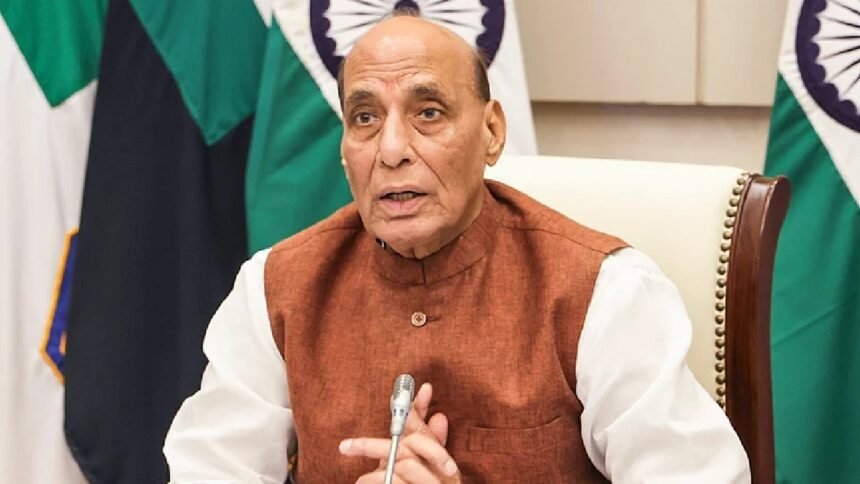
Defence minister Rajnath Singh reiterated his stand of taking a united stand against terrorism at the SCO Council of Heads of Government in Dushanbe on Tuesday. He also condemned double standards in dealing with terror outfits and stressed on stopping the radicalisation process.
While addressing the SCO meeting, Singh stated that terrorism is a serious threat to peace, development and stability across nations. He added that the impact of terror extends beyond just innocent lives lost as it also affects trade, investment and the youth.
Defence Minister Rajnath Singh, addressing the SCO Council in Dushanbe, stressed a united global stand against terrorism, condemned double standards, and called for dismantling terror support ecosystems, while also reaffirming India’s proactive security doctrine and holding bilateral talks with Tajikistan’s PM.
The Defence minister added that India stands for a joint fight against all forms of terrorism, including states supporting terror proxies and organisations that fund and host terror camps.

“Therefore, there can be no justification for terrorism, no double standards in fighting it, and no safe haven for those who sponsor, support, or nurture it. The entire terror-support ecosystem has to be dismantled by all countries in a firm and coordinated manner,” he said.
Meanwhile, Pakistan’s Deputy Prime Minister Ishaq Dar was also present at the meeting where Singh delivered his remarks on terrorism.
Rajnath Singh Reaffirms India’s Firm Stand Against Terrorism
Singh’s speech against terrorism comes as India continues to take a firm stance on Pakistan’s cross-border terrorism.
Last month, the Defence minister had warned Pakistan against testing India’s patience after a series of terror strikes emanating from Pakistan. He had said that India’s policy of dialogue and peaceful resolution of issues should not be seen as weakness by Islamabad.
Recently, Singh had spoken about India’s changed approach to terrorism. In his address to the nation on National Security Day, he had said that Operation Sindoor, Balakot Airstrikes and Surgical Strikes were examples of India’s new doctrine of responding to terrorism by taking the fight to the enemy’s territory.
“Operation Sindoor, Balakot Airstrikes and Surgical Strikes were not only a demonstration of surgical precision but also of a changed narrative where India has moved from mere verbal condemnation of terrorism to actual action. These operations were a signal to Pakistan and other terror-support states that India will not stand idle in the face of terrorism, but will take the fight to the very doorstep of those who perpetrate and sponsor it,” he had said.
Singh had asserted India’s commitment to peace and security during his Independence Day address too. He had said that the country was always open to engaging in talks and negotiations to achieve lasting peace.
However, he had also made it clear that terrorism and threats to India’s sovereignty will not be tolerated.
“Our commitment to peace remains unwavering; however, we are also fully prepared to meet any challenge to our security and territorial integrity. We want to build an India that seeks peace but is never soft on security and stands tall on issues concerning our sovereignty, integrity, and national interests,” he had said.
Rajnath Singh Strengthens Strategic Ties With Regional Powers At SCO
While expressing his concerns about terrorism at the SCO meet, Singh also held bilateral talks with Tajikistan Prime Minister Qohir Rosulzoda and Iran’s First Vice President Mohammad Reza Aref.
During his meeting with Rosulzoda, Singh expressed India’s civilisational ties with Tajikistan and said that there was a need to strengthen people-to-people contacts.
In a post on X, he said, “Delighted to meet HE Qohir Rosulzoda, Prime Minister of Tajikistan at the opening session of SCO Heads of Government meeting in Dushanbe. Underlined India’s civilisational ethos and people to people connect with Tajikistan. Also, conveyed our solidarity with Tajikistan in resolving regional challenges.”