


International
oi-Ashish Rana

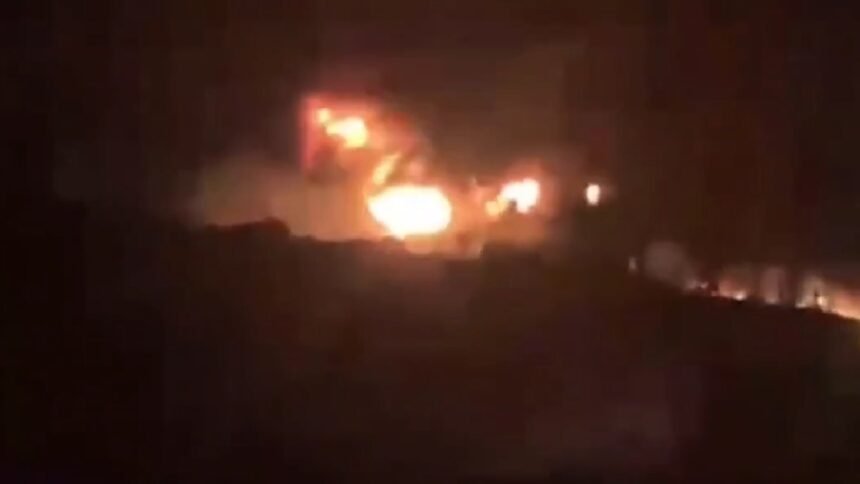
A ship carrying more than 2 million barrels of crude oil caught fire after hitting a naval mine in the Strait of Hormuz, Iran’s Islamic Revolutionary Guard Corps (IRGC) said on Saturday. The incident comes at a time when tensions between Iran and the United States are putting commercial ships and global oil supplies at risk.

Iran’s Islamic Revolutionary Guard Corps (IRGC) reported that a crude oil tanker carrying over 2 million barrels caught fire after hitting a naval mine in the Strait of Hormuz, accusing the vessel of using an unapproved route and disabling tracking systems amid heightened US-Iran tensions.
Iran claimed that the tanker was using a route that Tehran had not approved. According to Iran’s state-owned Press TV, the IRGC said the vessel was trying to cross the waterway illegally.
Iran Accuses Tanker Of Breaking Its Rules
The IRGC alleged that the tanker had switched off its tracking and radar systems to avoid detection by Iranian authorities. It did not identify the vessel in the statement provided.
Iran also warned ships against crossing the Strait of Hormuz, saying the waterway remained closed under its rules.
“The Strait of Hormuz is closed, and the consequence of defying Iranian regulations in the Strait of Hormuz is burning in the fire of trust in the terrorist US army,” the IRGC said.
Oil Tanker explodes in Strait of Hormuz after hitting naval mine: IRGCFollow: https://t.co/GHI09iAGh2 https://t.co/jqst42w2vD
— Press TV 🔻 (@PressTV) October 17, 2026
Why The Strait Of Hormuz Matters
The Strait of Hormuz is one of the world’s most important routes for transporting energy. Before the war, around one-fifth of global oil and liquefied natural gas trade passed through this narrow waterway.
Iran has restricted ship movements since US and Israeli strikes on the country on February 28. Tehran has also increased its attacks in response to a US blockade of Iranian ports and tighter sanctions imposed last month.
Two senior Iranian officials told Reuters that Tehran was using new methods against ships to keep oil prices high and influence US midterm elections.
Shipping Crisis Spreads Beyond Hormuz
The danger is not limited to oil tankers. Cargo and container ships have also been attacked, stopped from moving or sunk.
Attempts to reopen the waterway have made little progress since a temporary ceasefire agreed in June collapsed. Iran and the United States have exchanged proposals through intermediaries but remain divided over talks on Iran’s nuclear programme.
Attacks on ships in the Black Sea and threats from Iran-backed Houthi militants along a major Red Sea route are adding to the pressure on global shipping.