


International
oi-Ashish Rana

US, Iran, Qatar and Pakistan have opened a crucial round of negotiations in Switzerland, with the future of a nuclear agreement and the implementation of a fragile Lebanon ceasefire at the centre of discussions. The talks, being held at the Burgenstock resort overlooking Lake Lucerne, come days after the signing of the Islamabad Memorandum of Understanding (MoU), which laid the groundwork for reducing tensions across West Asia.

In Switzerland, the US, Iran, Qatar, and Pakistan, including officials like VP JD Vance and Speaker Mohammad Bagher Ghalibaf, are negotiating a nuclear agreement and a Lebanon ceasefire, building on the Islamabad MoU with a 60-day roadmap for regional dispute resolution.
Leaders Gather To Advance Islamabad MoU
Senior leaders and officials from the four nations are participating in the summit, which is expected to focus on a 60-day roadmap aimed at resolving key regional disputes. Discussions will centre on implementing the ceasefire framework, reducing hostilities and advancing negotiations towards a broader nuclear agreement.
Qatar and Pakistan are serving as mediators during the talks, while Swiss officials are facilitating discussions at the venue.
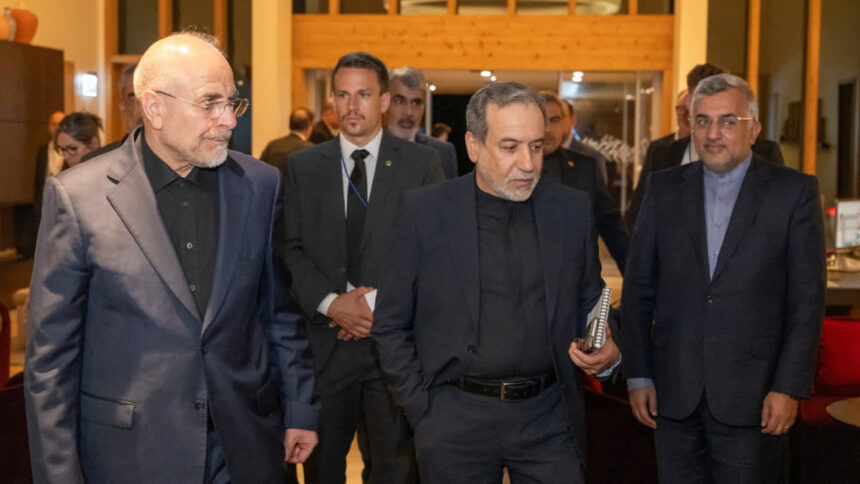
The Iranian delegation is led by Parliament Speaker Mohammad Bagher Ghalibaf and includes Foreign Minister Abbas Araghchi along with senior officials from the country’s central bank and oil sector. Representing the United States are Vice President JD Vance, Jared Kushner and Steve Witkoff.
Before leaving for Switzerland, Vance said, “I’m looking forward to starting the technical talks with the Iranians, the Pakistanis, and the Qataris. We’re going to hopefully make progress on the nuclear issue and the Lebanon ceasefire issue. Those are the two big things that I think we’re going to be focused on.”
Pakistan Prime Minister Shehbaz Sharif and Army Chief Field Marshal Asim Munir have also joined the discussions.
Lebanon Ceasefire Emerges As Key Agenda Item
One of the most significant developments in the summit is the inclusion of an emergency session on the conflict between Israel and the Hezbollah group in Lebanon.
The decision marks an important shift in diplomatic efforts, as neither Israel, Hezbollah nor the Lebanese government is directly participating in the Switzerland talks. However, negotiators have agreed to address the issue due to ongoing clashes in southern Lebanon and concerns over regional stability.
Diplomats hope progress on the ceasefire could help create momentum for broader peace efforts across the region.
Strait Of Hormuz Tensions Add Pressure To Negotiations
The talks are taking place amid rising tensions over the Strait of Hormuz, a critical global shipping route.
Iran has asserted control over the waterway, citing what it describes as repeated ceasefire violations linked to Israeli military operations in Lebanon. The United States has rejected Tehran’s position and insists that commercial navigation remains unaffected.
US President Donald Trump has warned that American tolls could be imposed in the shipping corridor if negotiators fail to secure a final agreement within the 60-day deadline.
Iranian officials, meanwhile, have indicated that any long-term deal will depend on all parties fulfilling commitments outlined in the interim agreement.
Focus Turns To Long-Term Nuclear Agreement
Ahead of the negotiations, Ghalibaf emphasised the significance of the discussions and referenced victims of the Minab school incident.
In a post on X, he said, “I consider the innocent children of Minab and all the martyrs of dear Iran to be watching over my every action and behaviour at every moment.”
The Swiss Foreign Ministry confirmed the arrival of the Iranian delegation, noting that the visit forms part of efforts to implement the MoU signed between Washington and Tehran.
The current negotiations are expected to expand upon the preliminary understanding reached earlier this week between Trump and Iranian President Masoud Pezeshkian. Under that framework, negotiators have been given 60 days to work towards a comprehensive nuclear accord while maintaining a delicate ceasefire arrangement across the region.