



International
oi-Gaurav Sharma

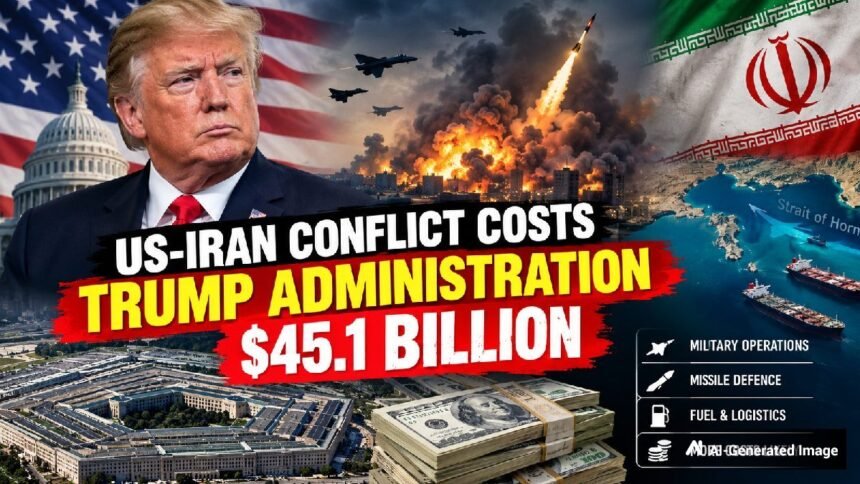
The Trump administration’s attack on Iran has already cost the United States $45.1 billion, the Pentagon’s latest estimate to Congress showed, according to people familiar with the figures, CNN reported, citing them.
The total includes $43.6 billion in war-related expenses through September 3, along with another $1.5 billion in extra fuel costs. But it fails to take into account the full financial impact of the conflict.
The Pentagon estimates the Trump administration’s actions against Iran cost the US $45.1 billion through September 3, including war expenses and extra fuel costs, but excluding repairs and indirect impacts. This figure surpasses earlier estimates from the Pentagon and the Congressional Budget Office.
The Pentagon’s report reportedly does not include costs of repairing damaged US military bases and facilities, and it does not give a comprehensive estimate of indirect costs associated with the military operations to Congress.

Pentagon Figure Surpasses Earlier Estimates
The latest Pentagon figure is much higher than previous estimates. The Congressional Budget Office (CBO) had estimated the Defense Department incurred about $38 billion in conflict-related costs through August 1.
The Pentagon had put the cost at about $37.5 billion in July.
The CBO’s figure included operational and logistical expenses, ammunition and equipment replacement, increased flight operations, military support activities and higher fuel costs. But the agency noted it had considerable uncertainty in its estimate since the Department of Defense had not responded to questions for information.
Costs Could Continue Rising
The CBO warned the costs could continue to rise depending on how intense and prolonged the conflict is.
According to the agency’s projections, an additional month of fighting at the levels of May and June would cost about $2 billion. If hostilities returned to July’s intensity, monthly expenses could rise to around $3 billion.
The agency also warned that the costs could be much higher if the conflict escalates.
Missile defence adds to financial pressure
Another major expense has been the use of missile-defence interceptors. The CBO said the heavy use of these could deplete the US military’s stock of interceptors for several years, a strategic and financial burden.
The impact of the conflict has already gone beyond the Pentagon’s spending.
Disruptions to oil and natural-gas shipments through the Strait of Hormuz and shipping through the Red Sea have contributed to higher prices for energy commodities. The CBO said higher prices for crude oil, gasoline, diesel and jet fuel would add to inflationary pressures.
The agency projected that PCE inflation in the first quarter of 2027 would be 0.5 percentage points higher than its second of 2026 projection, while core PCE inflation would be 0.3 percentage points higher.
Washington sought additional funding
The CBO also said the administration requested $87.6 billion in supplemental funding in June, including $67.1 billion for the Department of Defense. Of that, about $42.3 billion was identified as directly connected to the conflict.
The latest Pentagon estimate therefore puts the reported military cost at $45.1 billion, while expenditures on infrastructure repairs, diplomatic efforts, foreign aid and other indirect costs are not accounted for.