



International
oi-Gaurav Sharma

Israel’s politics are dominated by two high profile candidates with military and political backgrounds. Benjamin Netanyahu has been prime minister for many years, while Gadi Eisenkot, the former military chief has entered politics. Yet smaller parties are playing a big role in determining who will form a government.
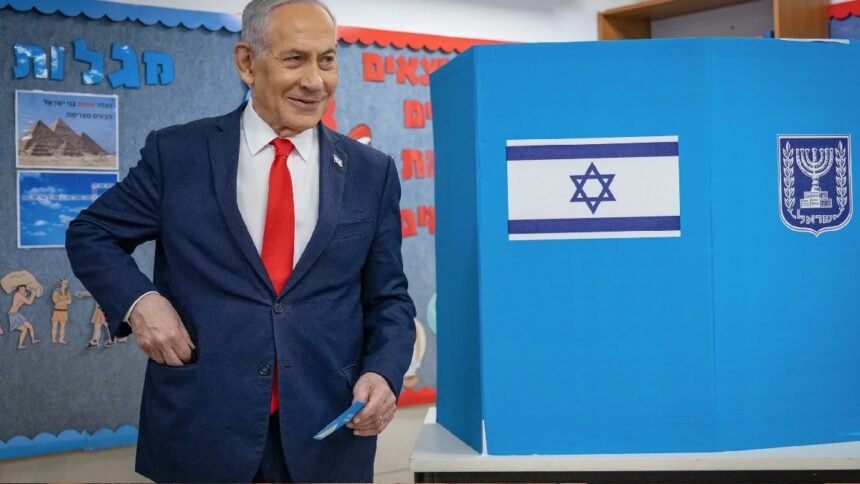
Leading the right-wing Likud party, Netanyahu is running for re-election. However he faces criticism over the Gaza War, a corruption trial and how his government handled the October 7th attacks in 2023. Eisenkot has challenged Netanyahu by pushing for change and accountability.
Israeli politics features Prime Minister Benjamin Netanyahu facing criticism and challenger Gadi Eisenkot, a former military chief; smaller parties like Ra’am and The Joint List are crucial kingmakers for forming a government majority in the 120-seat Knesset.
Smaller parties may play a deciding factor in the elections.

Who is Benjamin Netanyahu?
Benjamin Netanyahu is one of the longest serving prime ministers of Israel. He lead’s the Likud party and has a right-wing attitude to security and a right-wing stance on the Palestinian state.
From 1996 to 1999 he was prime minister and then again in 2009 until 2021. Since 2022 he has been prime minister once again.
Before becoming prime minister, Netanyahu held diplomatic roles. From 1984 to 1988 he was Israel’s ambassador to the United Nations. He then went onto be deputy foreign minister and became Chairman of Likud in 1993.
Since taking up the premiership again he has faced criticism from the international community over his military actions during the Gaza War. He also received an arrest warrant from the International Criminal Court in November 2024 for alleged crimes against humanity and war crimes. Netanyahu denies these allegations.
He also faces a lengthy corruption trial in Israel.
Who is Gadi Eisenkot?
Gadi Eisenkot is a former chief of staff for the Israel Defense Forces. He entered frontline politics in 2022 and leads the party Yashar.
Eisenkot was Chief of Staff of the Israeli military from 2015 to 2019. He then joined Benny Gantz’s National Unity alliance, becoming part of the emergency war cabinet set up after the October 7th attacks.
In June 2024, Eisenkot and Benny Gantz quit the war cabinet, stating that Netanyahu was not handling the situation well and there was no clear plan to end the war.
He formed the party Yashar. He promotes professionalism, holding people accountable for failure leading up to the October 7th attacks, and wants total conscription in the military including ultra-Orthodox Jewish men.
He has a unique position due to his military background. Yet his views on key issues such as relations with Arab-led political parties and the Palestinian Territories are important.
Who are the Kingmakers in the Election?
Israel uses a Parliamentary system so just getting the most amount of votes doesn’t mean you will form a government. Most parties will need to form a coalition so they can gain at least 61 members of support within the 120 member Knesset.
This can mean smaller parties can play a huge part.
1. Ra’am – Mansour Abbas’
Ra’am is led by Mansour Abbas and looks after the interests of Arab citizens living in Israel. They have previously shown how a smaller party can play a big part in Israel.
In 2021 Ra’am made history by being the first independent Arab party to join an Israeli governing coalition. This helped form a coalition of very diverse parties to stop Netanyahu’s unbroken time in government. Yet the government fell.
They could play a key role once again if opposition parties need more support in parliament. They are willing to negotiate with other parties to make sure their policies are met. This has made them stand out compared to some other Arab-led political parties.
Whether they would support forming a future coalition depends on the election results.
2. The Joint List
The Joint List is another party linked to Palestinian citizens in Israel. Yet they have taken a more strict approach to joining a governing coalition.
They have stated they may be able to give support to an anti-Netanyahu government in parliament, however they wouldn’t formally join. This is often referred to as a confidence and supply agreement or ‘parliamentary safety net’.
Their main aims include tackling organised crime and pushing for political advancement towards a Palestinian state.
They may influence confidence votes as they won’t be part of a coalition, however how much they influence depends on how many seats they have and if other parties are willing to negotiate.
Why Could They Matter?
The main thing to consider is whether Netanyahu’s bloc or opposition can get a steady majority in parliament. If neither side get enough votes to govern alone then negotiating with smaller parties may play a large role.
Ra’am may help form a coalition and The Joint List may influence confidence votes.
However there may be issues with how they feel about the Palestinian state, conscription, security and Arab-led parties.
Netanyahu has often mentioned his opposition may need to turn to Arab-led parties.
Overall this election isn’t just about Netanyahu and Eisenkot. It’s about whether opposing parties can put aside their differences and gain enough support in parliament to govern.