


India
oi-Swastika Sruti

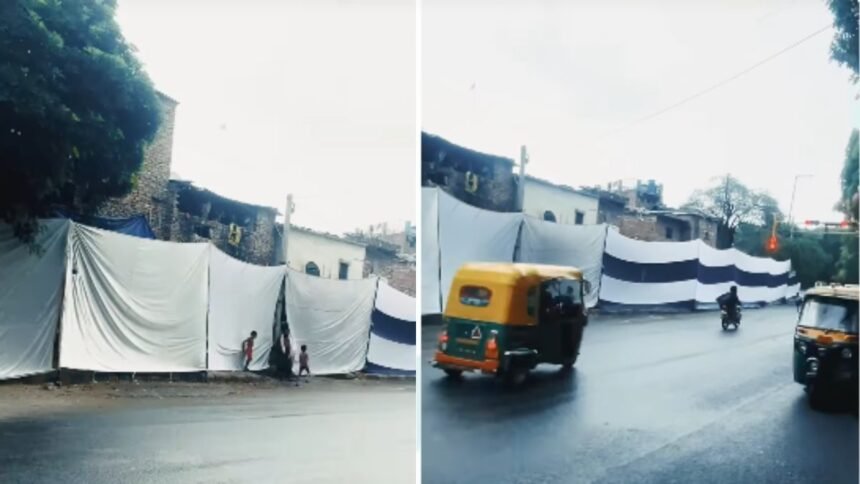
As Delhi hosts the BRICS Summit 2026, attention has shifted from the city’s decorated avenues to the screens placed near Vasant Vihar’s Coolie Camp, a settlement that also drew similar attention during the G20 Summit in 2023. For residents, the issue is not only about visibility. It is about whether their daily lives become harder whenever the capital prepares for a major global event.

Screens installed near Delhi’s Coolie Camp for the BRICS Summit 2026, echoing the G20 Summit 2023, raise concerns about hiding poverty and the severe impact of summit restrictions on residents’ daily lives and livelihoods.
The settlement falls near routes used for international delegations, making it part of Delhi’s security and beautification arrangements during high-profile summits. Screens and curtains have again brought back an old debate: is the city being presented better, or are parts of it being hidden from visiting dignitaries?
Coolie Camp screens revive questions from G20 2023
Coolie Camp residents have seen this before. During the G20 Summit in 2023, screens were installed around the locality because it lay close to movement routes for foreign delegates. At the time, some residents said the settlement was no longer visible from outside, while restrictions affected small businesses and daily travel.
The same concern has returned during the 18th BRICS Summit. Some residents believe the screens are meant to keep poverty away from the view of foreign guests. Others are less critical, saying Delhi must look clean, organised and secure when world leaders arrive for an international meeting.
But even among those who do not object to beautification, the practical worries remain serious. Many families in the settlement depend on daily wages, street vending, small shops and local services. For them, even a short period of movement restrictions can mean lost income, delayed purchases and difficulty reaching workplaces.
Residents say the problem is not limited to what visitors can or cannot see. During summit-related curbs, people may struggle to buy ration, operate small roadside businesses or move freely through familiar routes. In settlements where earnings are counted daily, three days of restrictions can unsettle household budgets.
Delhi’s image and the lives behind the screens
Major diplomatic summits usually bring traffic diversions, route sanitisation, security checks and beautification work. These are common in host cities across the world. Governments often want capital cities to appear efficient and orderly when global leaders, officials and media teams arrive.
The discomfort in Coolie Camp comes from the symbolism of the screens. For many residents and social media users, they appear to suggest that poverty is a visual problem to be managed temporarily, rather than a civic issue needing long-term attention. That perception has kept the controversy alive.
The debate has also split opinion locally. Some residents see the screens as an insult, arguing that the city’s poorer communities should not be treated like something to be covered. Others say temporary arrangements are acceptable if they help maintain order during a sensitive international event.
What remains common across these views is the need for clearer communication. Residents affected by summit restrictions need advance information on access, traffic movement, work timings and essential supplies. Without that, security arrangements can become confusing and costly for people with the least room for disruption.
Social media links the issue to growth claims
The screens near the settlement have triggered sharp reactions online. Several users referred sarcastically to claims around 7.8% GDP growth while questioning why poverty in the national capital still needs to be hidden during global events. These comments reflect public anger, but they should not be read as an official Delhi GDP figure.
Another post said, “So what if the slums have been covered? Does that mean Delhi has also been beautified? After the three days of restrictions, the tarpaulins should be returned to the people who had to endure them.”
Another user compared the present criticism with earlier political attacks over similar optics, writing that those who once criticised others were now using curtains for false prestige. Such reactions show how urban beautification has become a political and emotional issue, especially when it appears to exclude the poor from the city’s official image.
The criticism is not new. Indian cities have often faced questions over how they handle informal settlements during large events, infrastructure projects and VIP visits. The tension usually lies between temporary presentation and permanent improvement. Screens may change the view from a road, but they do not change housing, sanitation, jobs or public services.
The larger question for BRICS host city Delhi
The BRICS Summit has placed Delhi at the centre of international attention. Hosting such an event requires planning, security and visible civic management. Roads are cleaned, public spaces are decorated and traffic systems are tightened. These steps are expected during meetings involving several global leaders.
However, Coolie Camp shows the other side of such preparations. A city’s international image is shaped not only by decorated routes but also by how it treats people living along them. If residents feel restricted, ignored or hidden, beautification can quickly turn into a debate over dignity.
The most important question, therefore, goes beyond the screens. It is whether urban planning for global events includes the people most affected by temporary restrictions. Better information, access arrangements and protection for daily-wage earners can reduce the burden without compromising security.
The BRICS Summit will end, delegates will leave and the screens will eventually come down. Coolie Camp residents, however, will continue with the same daily struggles. That is why the controversy matters: it asks whether Delhi’s development should be measured by what is displayed to guests, or by what improves for those who live behind the curtains.