


International
oi-Swastika Sruti

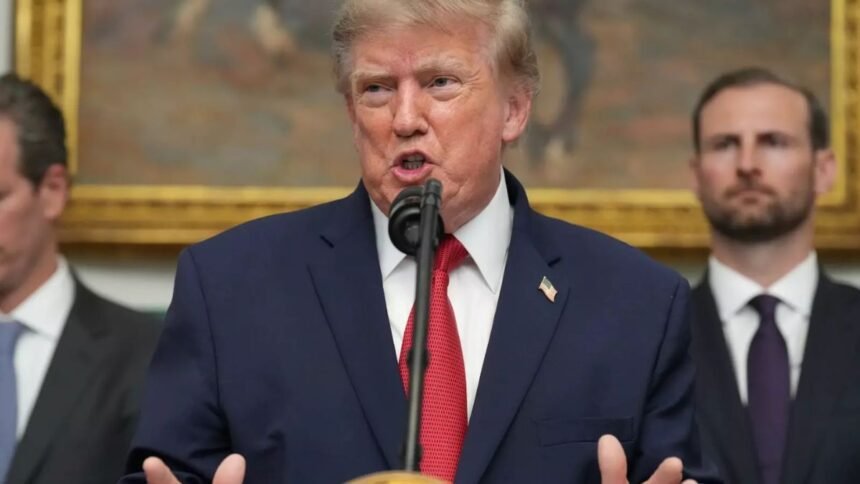
American President Donald Trump is set to sign the Lindsey O. Graham Sanctioning Russia and Iran Act of 2026, which has received approval from both chambers of Congress. This act would grant the US president immense powers to levy 100 percent tariffs on nations which will keep purchasing oil and gas from Russia, thereby putting nations like India and China under intense pressure.

The Lindsey O. Graham Sanctioning Russia and Iran Act of 2026, approved by Congress and set for President Trump’s signature, authorizes the US to impose up to 100% tariffs on nations buying Russian energy, potentially impacting India and China.
This piece of legislation was approved by the US House of Representatives by a vote of 262 to 159 on September 16, following approval by the US Senate in a vote of 86 to 11 on August 7.
The legislation is named after Senator Lindsey Graham, who has collaborated with the US legislators and administration of Donald Trump to create an environment conducive to sanctioning Russia.
What Does The New US Russia Sanctions Bill Say?
This bill is intended to increase economic pressure on Russia due to the war that Russia is waging against Ukraine. The bill imposes sanctions on Russian officials, financial organizations, and companies, as well as on the energy trade of Russia and so-called “shadow fleet” of ships used to deliver Russian oil and evade sanctions.
The most important part of this bill is that it gives the president of the US an opportunity to increase additional tariffs by 100 percent for countries which continue to buy energy from Russia.
The tariff bill will be applicable to those countries which are large consumers of Russian crude oil or natural gas, as well as countries participating in avoiding sanctions.
Does This Mean India Will Immediately Face A 100% Tariff?
No.
Signing the bill would not automatically impose a 100% tariff on Indian goods.
Instead, it would give Trump statutory authority to impose tariffs of up to that level if the specified conditions are met. The actual rate, products covered and timing would depend on subsequent action by the US administration. Current reporting also notes that the legislation gives the president the ability to adjust the tariff rate rather than making 100% mandatory in every case.
This distinction is important because headlines about a “100% tariff on India” can otherwise suggest that the levy has already been imposed.
Why Is India In The US Crosshairs?
India has continued to be one of the main importers of Russian crude oil, especially following the outbreak of the Russia-Ukraine war, which has affected the normal channels of energy imports.
The US law has mainly been directed at importers of Russian energy. India and China are some of the countries whose exposure to the newly acquired power is at risk.
Energy security is an important issue for New Delhi. India has continuously stated the need for diversified sources of energy to cater to its large population.
External Affairs Ministry has stated that India is still committed to providing energy security to its 1.4 billion people and will continue importing energy according to market trends.
India-US Trade Talks Face Another Challenge
The enactment of the new law has come at a delicate moment in the economic ties between India and the United States as the two nations are still in talks regarding trade.
The imposition of further tariffs on imports from India will put uncertainty on Indian exporters since its effects will be dependent on the actual tariff, the commodities subjected to the duties, and the timing of the imposition. This is according to the experts consulted by The Economic Times.
Indian exports to the United States may therefore be faced with extra challenges should the administration decide to use its powers to impose duties on Indian products.
However, the new law does not compel the president to impose the 100 percent duty.
What Other Measures Does The Bill Include?
The tariff provision is only one part of the legislation.
The bill also includes measures targeting:
- Russian government officials and senior leadership
- Russian banks and financial institutions
- Companies supporting Russia’s defence industry
- Vessels linked to Russia’s “shadow fleet”
- Foreign entities involved in sanctions evasion
- Financial transactions involving designated Russian institutions
- Iran-related sanctions, including an extension of existing sanctions authorities
The legislation also gives the president certain waiver powers under specified conditions, including when a waiver is considered to be in the national interest of the United States.
Why Ukraine Supports The Legislation
Ukrainian President Volodymyr Zelenskyy is positive regarding this piece of law since he claims that greater economic pressure can help decrease Russian revenues in the course of the war.
This bill was introduced by its sponsors as a means to exert more pressure on Russia and to provide the United States with greater leverage to push Russia into negotiations. This bill has gained bipartisan support in the Congress, although there were concerns raised regarding presidential powers related to tariffs.