



The order
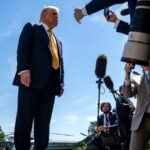
On 16 August 2026, President Trump directed the Pentagon to substantially reduce American participation in the Ulchi Freedom Shield exercises with South Korea — issued less than a day before the eleven-day drills were due to begin. He argued that the manoeuvres send a hostile signal to a North Korea he called “unthreatening,” cited their cost, invoked his rapport with Kim Jong Un, and pointed to Seoul’s refusal to help with his campaign against Iran. The order did not touch the 28,500 American troops stationed on the peninsula. It changed how the alliance trains — not, yet, whether it stays.
For President Lee Jae-myung the message is tangled. He calls peace the priority and insists the drills are defensive, not a rehearsal for invasion, while also warning that the South must prepare for the worst. He wants stronger independent defences and faster transfer of wartime operational control to Seoul. To see why a change to a training schedule can ripple across four capitals, you have to go back to a Korea that had no North and no South at all.
Before the line, there was only Korea
For most of its history Korea was a single nation — one language, one identity, its own dynasties. By the turn of the twentieth century it had become the prize in a contest between larger powers. A famous idea drove Japanese strategy: Korea was a dagger pointed at the heart of Japan. Whoever held the peninsula could threaten the home islands. Japan beat China in 1895, beat Russia in 1905, and formally annexed Korea in 1910. Thirty-five years of colonial rule followed. The division that came later was never a Korean choice — it arrived with Japan’s defeat.

The Soviets backed a communist state under Kim Il Sung; the Americans backed the fiercely anti-communist Syngman Rhee. Two flags, two ideologies, one nation split along the 38th parallel of latitude. The Cold War had found its first Asian fault line — and it did not stay quiet for long.
June 1950The Break
A civil war that became a great-power war
On 25 June 1950 North Korean forces crossed the parallel. They moved with shocking speed, took Seoul, and pinned the defenders into a shrinking pocket around Pusan. Then came one of the century’s great reversals: US General MacArthur’s amphibious landing at Incheon, far behind the lines. The tides were treacherous and many thought it would fail. It succeeded spectacularly. Seoul was retaken and the North’s army collapsed northward.
Here the war changed character. The original aim had been to defend the South; now UN and US forces pushed past the parallel toward the Chinese border. For Mao Zedong — his own revolution barely a year old — American troops arriving at the Yalu was intolerable. China poured in hundreds of thousands of soldiers under the banner of the “People’s Volunteer Army,” fighting by night, by surprise, by infiltration. Seoul changed hands yet again. The front eventually froze near where it had begun.
1950
Invasion & the Pusan Perimeter
The North sweeps south; the defence nearly falls into the sea.
1950
Incheon landing
MacArthur’s gamble reverses the war; Seoul is recaptured.
1950
China enters
Mao sends the Volunteers; the conflict becomes a US–China war.
1953
Armistice — not peace
The fighting stops near the 38th parallel. No treaty is ever signed.
The irony was total. Millions dead, cities flattened, two great powers bled against each other — and the border ended roughly where it started. The American bombing campaign against the North was immense; as the war ground on there were fewer conventional targets left standing. That memory of near-total destruction became load-bearing in North Korean politics. When Pyongyang speaks of an existential American threat, it is not only propaganda — it is a state built around the belief that only military strength can prevent a repeat.
The Southern memory
Without American intervention, we might not exist.
The Northern memory
Without military power, we could be destroyed by the Americans.
Two societies emerged from the same war with opposite lessons — and both lessons still shape the peninsula today.
1953–2026The Divergence
Two roads from the same rubble
One myth is that the South was always destined to win economically. It was not. For years after the war the South was poor and agrarian, leaning on foreign aid, while the North inherited much of the peninsula’s heavy industry from the colonial era and looked, for a time, like the stronger half. The decisive turn came later — Park Chung-hee’s export-led industrial drive and the rise of the great conglomerates. But geopolitics mattered as much as policy: the American security umbrella let Seoul pour its energy into factories instead of only into survival. The South’s economic miracle is also a Cold War story, written on the frontline of containment.
The North took the opposite road into isolation and militarisation, eventually building nuclear weapons and long-range missiles. The result is one of the strangest realities in modern geopolitics: two peoples from the same villages and families, now living under radically different systems on either side of the most heavily armed border on Earth. The separation was never a clash of civilisations. It was geopolitics, made permanent.
Order of Battle2026
North has the numbers. South has the machine.
The balance on the peninsula is not settled by asking who has the bigger army. The North holds a manpower edge and the world’s densest artillery. The South answers with money, technology and an industrial base — a defence industry now exporting tanks and howitzers to Poland. Below, each row is scaled to its own comparison; the dashed centre is the Demilitarized Zone (DMZ).
◀ South Korea Conventional balance North Korea ▶
Counts favour the North; capability favours the South. Seoul’s tanks (K2 Black Panther) and jets (F-35A) are modern; much of the North’s fleet is 1960s vintage — T-54/55 tanks and Romeo-class subs. *North Korea publishes no real defence budget; the figure is a rough Western estimate. The South’s 2026 budget rose about 7.5% to ₩65.9 trillion, funding its “three-axis” detect-intercept-retaliate system plus AI, drones and unmanned systems.
So the peninsula holds a peculiar equilibrium: the North has more soldiers, the South has more money and technology, the North has nuclear weapons — and the South has the world’s most powerful military alliance standing behind it. That last item is the true counterweight.
28,500
US troops stationed in South Korea
1953
Mutual Defense Treaty still in force
0 vs ~50
Nuclear warheads: South none, North ~50 assembled
The equaliser: missiles and the bomb
Unable to match the South across a conventional battlefield, Pyongyang built a force designed to make any attack on the North unbearably costly. Its logic is asymmetry — artillery on Seoul, cyber and special forces, and above all a growing nuclear-and-missile arsenal meant to compensate for weakness elsewhere. Analysts estimate the North has assembled roughly 50 warheads, with fissile material for perhaps 90, and is adding an estimated six to twelve a year. One RAND projection warned the stockpile could approach 200 by 2027.
~50
Assembled warheads (FAS / SIPRI, 2025)
~90
Warheads possible from fissile stock
6
Nuclear tests, 2006–2017 (no 7th, yet)
MIRV
Multiple-warhead missiles in development
The missiles that carry those warheads now span every range band. Short-range solid-fuel systems can strike anywhere in the South within minutes; intermediate-range missiles reach Japan and the US military base in Guam; and a family of intercontinental missiles — culminating in the solid-fuel Hwasong-20, unveiled in late 2025 as the North’s “most powerful” weapon — is designed to hold the American homeland at risk. Solid fuel is the quiet menace here: it lets a missile launch on short notice, with little warning.
Reach of North Korea’s ballistic missiles · estimated maximum range (km)
Seoul
200 Tokyo
1,300 Guam
3,400 Los Angeles
9,500 Washington
~14,400
KN-23 Hwasong-11A · SRBM
Hwasong-12 IRBM · liquid
Hwasong-16B IRBM · hypersonic glide
Hwasong-15 ICBM · liquid
Hwasong-20 ICBM · solid · MIRV
Short-range (SRBM) Intermediate (IRBM) Intercontinental (ICBM)
Ranges are open-source estimates; real accuracy and warhead reliability at full distance remain uncertain. The Hwasong-17 is assessed to carry up to four warheads. A working multi-warhead capability — known as MIRV, for Multiple Independently-targetable Re-entry Vehicles — was first tested unsuccessfully in June 2024; it would let a single missile threaten several targets at once and strain missile defences.
Kim Jong Un does not need to believe he can win a war. He needs to believe he can create enough risk and destruction to make Washington hesitate.
Tumen RiverThe New Axis
A short border with long consequences
For most of its length the North’s frontier runs with China. But in the far northeast, along the Tumen River, it meets Russia across a sliver of land barely seventeen kilometres wide. That thin seam — highlighted below — has become one of the most strategically loaded borders in the world.

In June 2024 the two states signed a comprehensive strategic partnership treaty with a mutual-assistance clause — the closest thing to a formal alliance either has held in decades. Since late 2024, Pyongyang has done something it had not done in seventy years: sent its soldiers to fight a foreign war, deploying troops to help Russia repel Ukraine’s incursion into the Kursk region. The human cost has been heavy, and the strategic payoff, for Kim, is exactly the kind of thing that keeps planners in Seoul, Tokyo and Washington awake.
North Korea’s stake in Russia’s war (intelligence estimates, 2024–26)
20,000+
Troops dispatched to Russia since late 2024
~11,000
Estimated still deployed in Kursk, early 2026
~6,000–7,000
Killed or wounded, per Seoul, London & Kyiv
In exchange for manpower, artillery shells and ballistic missiles, North Korea is reported to receive Russian help with satellites, air defence, drones and missile technology — plus something money cannot buy: real combat experience for an army that had not fought a war in generations. Its troops, caught out early by drone warfare, adapted fast.
The Gamble2026
Deterrence is not weapons. It is belief.
This is why a sudden announcement by Donald Trump to change the US–South Korea militaries’ training schedule moves the whole board. The joint exercises are not mainly about teaching South Korean soldiers to fight — they already can. They are about integration: making sure two militaries can share intelligence, coordinate air and missile defence, and operate together in a crisis. And they are a signal — proof that an attack on the South would immediately involve the United States. Pyongyang calls them a rehearsal for invasion. Trump calls them a bargaining chip. He has played this card before, suspending US–South Korea drills during his first-term diplomacy with Kim Jong Un.
The gamble is plain. If scaling back the exercises opens space for talks, tensions could ease. If it instead seeds doubt about American readiness or commitment, it could do the opposite. Because deterrence runs on belief, and four audiences are all recalculating at once.
Seoul
Will Washington actually honour its commitments if the moment comes?
Pyongyang
Is this a genuine opening — or just another negotiating tactic?
Tokyo
Do American security guarantees across the region still hold?
Beijing
How much US power will remain on China’s doorstep?
China is watching most closely of all. Beijing does not control Pyongyang — the North has frustrated it repeatedly — but it has a bedrock interest in preventing the North’s collapse, which could send refugees across its border, and in stopping a unified Korea aligned with Washington from arriving at its frontier. That makes the peninsula less a quarrel between Kim and Seoul than a piece of the larger contest over the balance of power in Asia.
Into that contest, Trump introduces a distinct ingredient: unpredictability. Allies and adversaries have spent decades learning to read American power through treaties, deployments and doctrine. They cannot assume yesterday’s position will be tomorrow’s. Trump believes that uncertainty is leverage — that if Kim thinks pressure might ease he may talk, if Seoul fears a conditional alliance it may spend more, if Beijing sees forces pulled back it may recalculate. Everyone is forced to price the risk again. That can be useful. It can also be dangerous.
Which is why Lee’s double message is the right one. The South wants peace but cannot prepare only for peace. It has to plan for diplomacy failing, for the North miscalculating, for deterrence fraying — or for American strategy simply changing without warning. The South Korea of 2026 is nothing like the desperate, war-torn state of 1950; it is a technological giant with a world-class defence industry. Yet it is still preparing for a war that began seventy-three years ago, and it still believes the presence of American forces is among the strongest guarantees that the war will not begin again.
That is what makes Trump’s decision so consequential. The question was never whether South Korea can fight. It is whether the American commitment to fight alongside it remains beyond question. And once that question enters the minds of Seoul, Pyongyang, Beijing and Tokyo at the same time, the strategic equation on the peninsula quietly begins to change.