



Cricket
oi-Gaurav Sharma

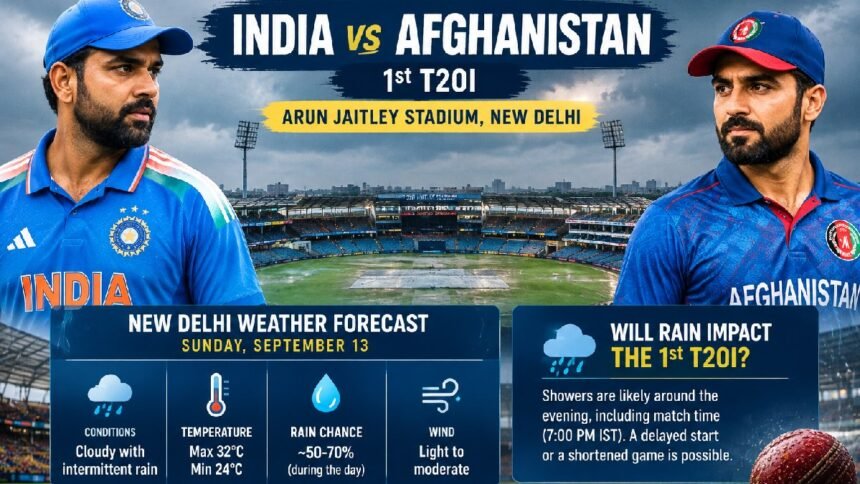
Rain could shape the opening night of the India vs Afghanistan T20I series in New Delhi on Sunday, but an improved drainage setup at the Arun Jaitley Stadium may prevent a long delay if showers are brief. The first match of the three-game series is scheduled for September 13, with the same venue also hosting the next two fixtures on September 15 and 17.
The weather is the biggest pre-match concern for supporters planning to attend and for viewers expecting a full contest. The India Meteorological Department has forecast a cloudy day with light rain in New Delhi on Sunday. The outlook points to possible interruptions rather than a clear indication of a washout.
Light rain is forecast for the India vs. Afghanistan T20I series opener on September 13 in New Delhi, potentially causing delays, but upgraded drainage and cover facilities at Arun Jaitley Stadium may allow play to resume quickly after brief showers; high humidity is also anticipated.

Private weather forecaster AccuWeather has also indicated unsettled conditions, describing the day as one where “some sunshine” could give way to clouds and light rain in the afternoon. The more uncomfortable factor may be humidity, with the RealFeel temperature expected to rise to around 41°C, making conditions demanding for players and spectators.
India vs Afghanistan weather: What it means for the 1st T20I
For a T20 match, even short spells of rain can become significant because the playing window is limited. Covers must be brought on quickly, the pitch square needs protection, and the umpires must be satisfied that the outfield is safe before play can begin or resume. Slippery patches can raise the risk of injury, especially for fielders running near the boundary.
At this stage, the forecast suggests the match is more likely to face a delay or reduced overs than a complete abandonment. Light rain is easier for ground staff to manage, provided it does not continue for long periods. The timing of showers will be crucial, especially if rain arrives close to the toss or during the first innings.
Humidity could also influence the cricket itself. Bowlers may struggle with grip if the ball becomes damp, while fielding teams will need to manage sweat and moisture carefully. Batting conditions can change quickly under cloud cover, especially if the pitch remains under covers for an extended period before the start.
Arun Jaitley Stadium drainage may reduce rain delays
The Arun Jaitley Stadium is better equipped than before to handle passing showers. The Delhi & District Cricket Association had upgraded rain-management facilities before the 2023 ODI World Cup, including a lightweight cover designed to protect the entire playing surface. Such full-ground protection can make a major difference during short spells of rain.
The venue also added a new super sopper to the three machines already available. These machines are used to remove water from the outfield after rain. With the upgraded drainage system, the outfield is expected to be ready for play within about 15 minutes of rain stopping, provided the rain is not heavy or prolonged.
That does not mean play is guaranteed in all conditions. Umpires still have the final say after inspecting the pitch, run-ups and outfield. Visibility, lightning risk, puddles near high-traffic areas and player safety remain key factors. But the upgraded setup reduces the chance of a lengthy delay caused only by surface water.
Delhi has staged many high-profile matches where dew, haze, heat and uneven weather have been part of the tactical conversation. In a September evening fixture, teams may also factor in moisture under lights. Captains could prefer to chase if conditions point to interruptions, though a delayed start can complicate team planning and bowling allocations.
Series opener important for both teams
The first T20I carries significance beyond the weather. India come into the series needing rhythm in the format after an uneven white-ball run. Their recent T20 results have not fully reflected the status and expectations attached to the side, making this home series an opportunity to settle combinations and regain control.
Afghanistan, meanwhile, remain one of the most competitive T20 sides in world cricket. Their bowling attack, particularly spin, can test any batting order if conditions offer grip. A shortened match could bring them further into the contest, as reduced-overs games often reward aggressive batting, smart match-ups and calm decision-making under pressure.
For India, the key challenge will be balancing experimentation with urgency. A three-match series at one venue gives the team management a controlled environment to assess form and roles. However, rain-affected games can limit how much can be learned, especially if batters or bowlers receive only brief involvement.
The schedule also means any disruption on Sunday will not be isolated from the wider series. With the second and third T20Is to follow quickly at the same ground, both sides will be watching how the pitch behaves after rain and how the outfield responds. Ground conditions across the three matches could become a recurring talking point.
For fans, the practical takeaway is cautious optimism. The New Delhi forecast is not ideal, and light rain could interrupt the evening. But the Arun Jaitley Stadium’s improved covers, additional super sopper and faster drainage response give the match a reasonable chance of going ahead if the rain remains brief and manageable.