


India
oi-Madhuri Adnal

New UPI rules have raised one obvious question among users: Will we now have to pay to use UPI?
The short answer is no, at least for most everyday payments.
Most UPI payments remain free, with person-to-person transfers and merchant payments up to ₹2,000 unaffected by new charges. A Merchant Discount Rate (MDR) applies only to specified transactions above ₹2,000, impacting about 4% of merchant payments, and is not directly charged to customers.
If you use UPI to send money to a friend or family member, there will be no charge, regardless of how much you transfer. If you use UPI to pay a shop or other merchant, payments of up to ₹2,000 will also remain free.

The government has clarified that the new framework will affect only certain merchant transactions. In fact, it says around 96% of merchant transactions will remain unaffected.
So, what exactly is changing? Here are the answers to the questions most UPI users are likely to have.
Will I be charged when I send money to another person?
No.
If you send money to your friend, family member or anyone else through UPI, you will not have to pay a transaction fee.
This applies regardless of the amount. There is no new charge for person to person UPI payments.
The government has also clarified that there will be no platform fee or other charge imposed on individuals for sending or receiving money through UPI.
What if I pay a shop using UPI?
For payments of up to ₹2,000, you will not have to pay MDR.
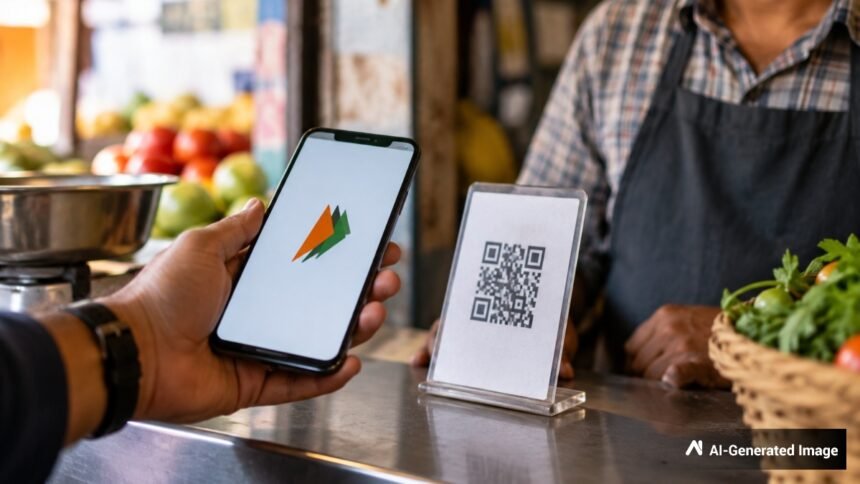
So, if you scan a QR code at a neighbourhood shop and pay ₹500, ₹1,500 or ₹2,000 using UPI, there will be no additional charge for you.
This is expected to cover a large share of everyday UPI payments.
What happens if I pay more than ₹2,000?
This is where MDR comes into the picture.
A 0.4% MDR will apply to specified merchant transactions above ₹2,000.
But there is an important point here. MDR is not supposed to be charged to the customer.
It is a charge within the payment ecosystem, involving participants such as banks, payment service providers and UPI application providers.
For transactions of ₹75,000 and above, the MDR will be capped at ₹300 per transaction.
So, will a shopkeeper ask me to pay extra because of MDR?
The government says customers should not be made to pay the MDR.
Banks have been advised to ensure that merchants do not pass the MDR cost on to customers. UPI application providers have also been prohibited from imposing platform fees or hidden charges.
In simple terms, the introduction of MDR does not mean that a customer paying through UPI should suddenly see an extra charge added to the bill.
Will small shops and street vendors be affected?
Small merchants have been given protection under the framework.
Merchants receiving up to ₹1 lakh a month through UPI QR codes under the Person to Person Merchant category will continue to get zero MDR on their transactions.
This covers businesses such as street vendors, small neighbourhood shops and other micro businesses.
Does every payment above ₹2,000 attract the same MDR?
No.
There are separate provisions for some sectors.
For example, merchant transactions above ₹2,000 in essential and thin margin sectors such as railways, telecommunications, insurance, fuel and agricultural inputs will attract a flat MDR of ₹5 per transaction.
The lower fixed amount is intended to take into account the nature of these sectors and their relatively narrow margins.
What about mutual funds and stock market payments?
Payments related to mutual funds, securities, stockbrokers and dealers will have an MDR of 0.02%, with a maximum of ₹300 per transaction.
How many UPI merchant payments will actually be affected?
This is perhaps the most important number in the entire framework.
The government estimates that MDR will apply to only about 4% of merchant transactions.
That means around 96% of merchant transactions will continue without MDR.
Most of these payments are either below the ₹2,000 threshold or fall under the zero MDR arrangement for small merchants.
Is there any limit on how many free UPI payments I can make?
No monthly limit has been introduced for free UPI usage.
Individuals can continue using UPI without a monthly quota or a limit on the number of free transactions.
There are, however, daily transaction limits set by banks and NPCI for security and risk management. Depending on the type of transaction, these limits can generally range from ₹1 lakh to ₹5 lakh.
These limits should not be confused with a point at which UPI starts charging users.
Why is MDR being introduced in the first place?
The government says the move is intended to make the UPI ecosystem financially sustainable as it continues to expand.
The MDR collected from specified merchant transactions will be shared among participants in the payment ecosystem, including banks, payment service providers and UPI application providers.
The revenue is expected to help support the operation and expansion of UPI infrastructure, including in rural and semi urban areas.
Will some of the money go towards helping small merchants?
Yes.
The framework provides for a dedicated fund for promoting UPI among small merchants.
An amount equivalent to 5% of total MDR collections will be contributed to this fund. The money will be used to encourage wider UPI acceptance and continued usage among small businesses.
What does all this mean for a regular UPI user?
For someone who mainly uses UPI to send money to family and friends or make everyday purchases, there is no major change in how they pay.
Person to person payments remain free, no matter how much money is transferred. Merchant payments up to ₹2,000 remain free, while small merchants covered under the zero MDR framework will continue to receive payments without MDR.
The new charge applies only to specified merchant transactions above the applicable limits. Most importantly, MDR is not a new tax on UPI users. Customers are not supposed to be charged separately for it.
The government says the framework, introduced under the Payment and Settlement Systems Act, 2007, is aimed at keeping everyday UPI payments free while creating a sustainable system to support the continued growth of digital payments in India.