


International
oi-Swastika Sruti

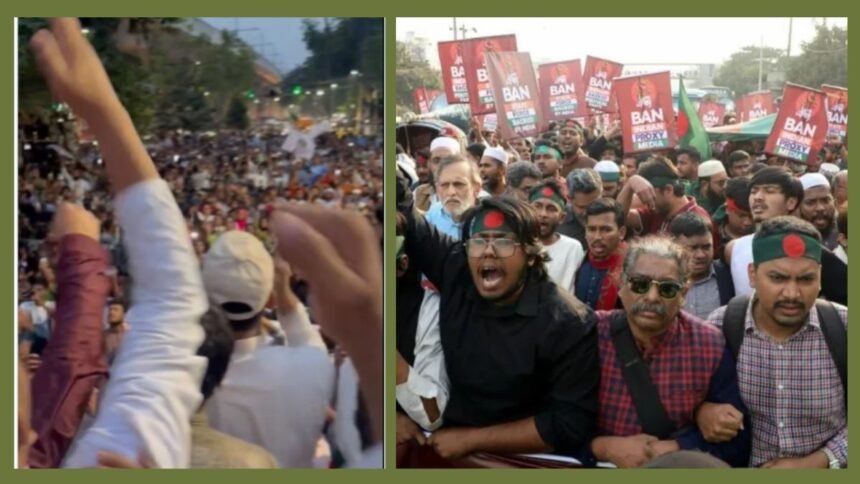
There were anti-India slogans shouted out during a protest march held in Bangladesh’s capital, Dhaka on Friday, October 30. As many as thousands are reported to have joined the protest that took place in Bangladesh against the government of Prime Minister Tarique Rahman.

Thousands protested in Dhaka on October 30 against Bangladesh’s economic and energy crises, demanding ministerial resignations; leader Nahid Islam shouted anti-India slogans, citing issues including the Ganga water treaty expiring December 2026.
Led by NCP leader Nahid Islam, the protest was based on increasing prices, shortage of electricity and insufficient supply of fuel and gas.
The protesters also called for the resignation of the home minister Salahuddin Ahmed and energy minister Iqbal Hasan Mahmud Tuku due to their failure to solve the increasing problems in the country.
But the protest also turned anti-India, with slogans such as “Delhi Nahi, Dhaka” being shouted outside the National Museum in Dhaka. Videos posted online show Nahid Islam shouting the slogan, with the people answering back with “Dhaka, Dhaka”.
Meanwhile… #Dhaka on edge again.”Dilli na Dhaka” (anti-India) slogans are back on Dhakas streets… The face of Bangladeshs 2024 July uprising Nahid Islam, now in opposition, led a mass rally today demanding the resignation of their Home and Energy Ministers.
— Nayanima Basu (@NayanimaBasu) October 30, 2026
Nahid Islam Accuses India Of Interfering In Bangladesh
In his speech at the meeting, NCP chief Nahid Islam accused India of trying to act against the interests of Bangladesh. He alleged that the Tarique Rahman-led government would fail to protect the country from any Indian intervention.
Islam raised some problems related to killing on the borders of India and Bangladesh and discrimination against Muslims in Assam and West Bengal. The other problem raised by him was the demolition of mosques in Delhi.
All the above-mentioned points have come up in his political speech and remain unproved.
The chief of NCP warned that Bangladeshis would start their protests again unless the government could secure a good bargain with India over the distribution of Ganga water.
The country should not allow anyone to reduce the amount of water it gets and fresh talks must be held with New Delhi.
Why The Ganga Water Treaty Has Become A Major Issue
The Ganga water-sharing agreement has become an important issue in Bangladesh ahead of its expiry in December 2026.
India and Bangladesh signed the 30-year Ganga Water Sharing Treaty on December 12, 1996. Under the agreement, the two countries share the available water of the Ganga at the Farakka Barrage during the dry season, from January to May.
In Bangladesh, the Ganga is known as the Padma River. Its water system supports agriculture, livelihoods and other economic activities, making the agreement important for the country.
Bangladesh’s Water Resources Minister Shahiduddin Chowdhury Anee has called for a new or revised agreement before the existing treaty expires. He has also said that Dhaka wants a guarantee clause to protect its share of water during the dry season.
India has maintained that discussions on river-related matters will take place through the existing bilateral mechanism, the Joint Rivers Commission. The treaty is scheduled to expire on December 12, 2026.
NCP Leaders Raise Demands Over Electricity, Gas And Inflation
While slogans against India were the highlight of the protest rally, the major point of agitation among protesters was the economic and energy crisis prevailing in the country.
NCP leaders criticized the government for being unable to provide proper and sufficient supply of electricity, gas, and fuel in the country. Moreover, they had also been raising issues regarding the soaring prices of necessities for common households.
NCP leaders demanded the resignation of both Home Minister Salahuddin Ahmed and Energy Minister Iqbal Hasan Mahmud Tuku. Nahid Islam stated that if the concerned ministers did not resign, the protest would spread throughout the country. In addition, he also threatened of holding protests at the residence of Prime Minister.
Akhtar Hossain, an NCP MP, raised the question of LPG cylinders. He said that one LPG cylinder in Kolkata costs approximately 1,000 taka, while the same thing costs more than double the amount in Bangladesh.
Hasnat Abdullah Also Joins The Demonstration
NCP MP Hasnat Abdullah was also present at the rally. He had previously made controversial remarks about India’s northeastern states and referred to the Siliguri Corridor, the narrow stretch of land connecting India’s northeastern region with the rest of the country.
His participation brought renewed attention to earlier statements by NCP leaders concerning India’s territorial and strategic interests.
Nahid Islam was among the prominent faces of Bangladesh’s July 2024 uprising, which led to the fall of Sheikh Hasina’s government. Since then, several political leaders and student activists in Bangladesh have made statements critical of India.
Why The Protest Matters For India-Bangladesh Relations
The latest demonstration comes amid domestic pressure on the Tarique Rahman government over inflation, energy shortages and public services.
Following the formation of the BNP-led government in February 2026, anti-India rhetoric had appeared to ease. However, Friday’s rally brought such slogans back into public attention.
The demonstration combined demands over domestic economic problems with criticism of India’s policies and the Ganga water-sharing issue. While the main focus was the government’s handling of electricity, fuel and inflation, the anti-India slogans and statements added another dimension to the protest.
The upcoming expiry of the Ganga Water Sharing Treaty is also likely to remain an important issue in relations between the two neighbouring countries as both sides consider the future of the agreement.